
AI agent security and identity, explained

AI security, from the identity side: how to govern the software that now acts in your systems — service accounts, API keys and AI agents — with the same rigour as the people who use them.

Start here

The ideas behind securing AI agents, one at a time.

  • Explainer · · 7 min read

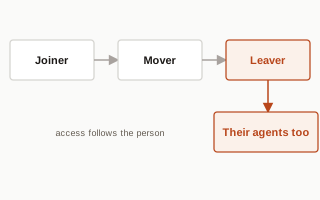
    Joiner, mover, leaver (JML): the identity lifecycle for people and AI agents

    The joiner, mover, leaver process in IAM: what each event should do, how to automate it, and what changes when people own AI agents.

  • Explainer · · 6 min read

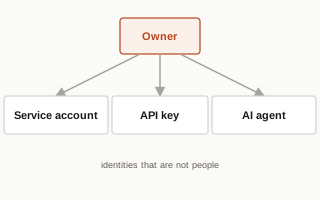
    What is a non-human identity?

    A non-human identity is an account software uses to act: service accounts, API keys, bots, AI agents. Why they are risky and how to govern them.

  • Explainer · · 8 min read

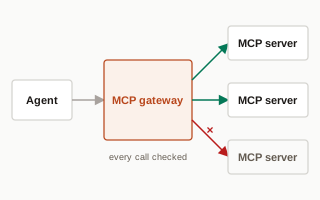
    What is an MCP gateway?

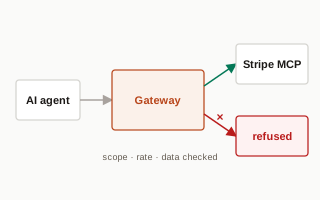
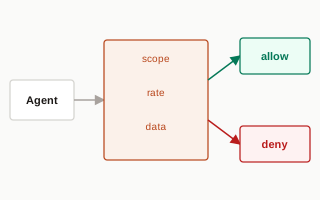
    An MCP gateway checks every AI agent tool call — identity, scope, rate and data — before it reaches the MCP server. Why tokens alone are not enough.

  • Explainer · · 2 min read

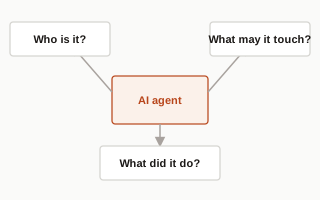
    AI agent security: where identity fits

    AI agent security is mostly an identity problem: who the agent is, what it may touch, what it did. The risks, and the identity controls that address them.
Guides

How to put the controls in place.

  • Guide · · 6 min read

    AI agent access control

    AI agent access control decides which tools and data an agent can use, checks every call as it runs, and keeps access governed over the agent's life.

  • Guide · · 6 min read

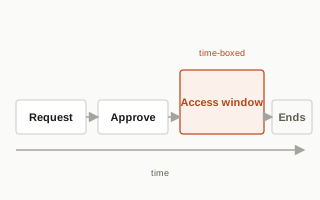
    Just-in-time privileged access for people and AI agents

    Just-in-time privileged access grants elevated access only when needed, for a short time, then removes it. How JIT PAM works, including for AI agents.

  • Guide · · 5 min read

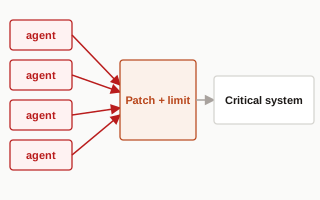
    When attackers bring AI agents: protecting the systems that matter

    Attackers now point swarms of AI agents at thousands of sites at once. Patch fast, then limit what a break-in can reach. A practical checklist.

  • Guide · · 3 min read

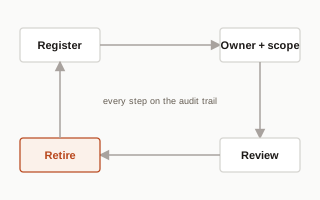
    How to govern AI agents

    AI agents need what people get: an owner, least privilege, access reviews, offboarding and an audit trail, plus enforcement as they run. A practical guide.
Securing MCP servers

What a popular server lets an agent do, and how to limit it.

  • MCP server · · 4 min read

    Securing the GitHub MCP server

    The GitHub MCP server lets AI agents read code, open PRs and merge. How to limit what an agent can do with it, and what to watch for.

  • MCP server · · 3 min read

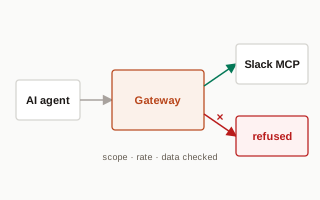
    Securing the Slack MCP server

    Slack's MCP server lets AI agents search messages and post as a person. How to limit what an agent reads and sends, and what to watch for.

  • MCP server · · 3 min read

    Securing the Stripe MCP server

    Stripe's MCP server lets AI agents read customers and payments and issue refunds. How to limit what an agent can change, and when to require a person.
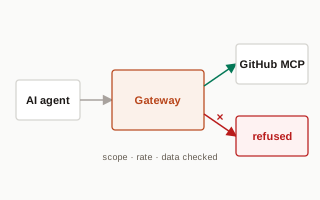
Watch AtmanID stop an agent mid-call.

The gateway refuses a deploy agent’s call to GitHub; Iris turns “suspend it” into a request card that waits for your confirmation. Watch the full one-minute tour →

Read the transcript
  1. Your AI agents act in milliseconds, in production, in your name. Who stops them mid-call?
  2. Every agent-to-tool call passes through AtmanID, checked inline before it reaches the server.
  3. A deploy agent tries to write to your GitHub repo. Its token is valid, but write_file was never in its scope.
  4. Denied mid-call: GitHub never sees it, and the decision is recorded on the tamper-evident audit trail.
  5. Then ask Iris, in plain English, to stop it. Iris acts with your permissions, never more.
  6. Iris proposes the fix as a request card: the risk, exactly what will change, and how to undo it.
  7. Nothing happens until you confirm, and every step lands on the audit trail.
  8. People and agents: one identity model, one audit trail. AtmanID — stop them mid-call.

Product tour

The whole platform, in one minute.

Recorded on the live product with a demo organisation’s data: the gateway refusing an agent’s call, an access request written by Iris, separation of duties, the identity graph, the audit chain and compliance.

Read the transcript
  1. Every agent-to-tool call passes through AtmanID, checked inline before it reaches the server.
  2. A deploy agent tries to write to your GitHub repo. Its token is valid, but write_file was never in its scope — denied mid-call, and GitHub never sees it.
  3. Need access? Just ask Iris, in plain English. Iris writes the request card — the risk, exactly what is asked for, the justification and the time limit — filed only when you confirm, then routed for approval.
  4. Separation of duties, checked continuously: entering and approving the same vendor bills is flagged, with the exposure attached.
  5. Who can reach what, and how: critical access granted directly, with no role to explain it — one click starts a review.
  6. Is the audit trail exactly as it was written? Every record is hash-chained, the newest signed outside the database, and re-verified on demand, every night and in full every week.
  7. Six compliance frameworks in one live view, each against the target your organisation sets.

Workflows

Five workflows — live in production today.

MCP Gateway — inline policy enforcement

Live

Every agent→MCP call transits the gateway before it reaches the destination server: scope-checked, rate-limited per agent and per server, and DLP-inspected in both directions against SSN, Luhn-validated card, AWS key, private-key and JWT checks — plus your own regex rules. Run a server in SHADOW to see what a policy would have denied, then promote it to ENFORCE. Enforcement lives on infrastructure you control, not on the MCP server’s good behaviour.

Read the gateway policy engine guide

Going deeper: Deploying so nothing bypasses the gatewayUse it from Envoy or KongData residency and recovery

Who AtmanID is for

Four roles. One platform. Same audit trail.

Identity Admin

Daily operator — provisions access, runs certifications, investigates anomalies.

CISO / VP Security

Executive oversight — readiness dashboards, risk posture, audit posture, board reporting.

Platform Engineer

Self-service consumer — ships GitHub Action + MCP integrations against the v1 API.

External Auditor

Periodic verification — exports evidence packs, walks audit chains in two clicks.